Vinyl Resurgence
According to Statista, vinyl LP sales reached their lowest in 2006, with fewer than one million records sold across the United States. In contrast, over 500 million CDs were sold that same year. Since then, however, vinyl has made a remarkable comeback, with sales climbing steadily to reach 43.6 million records in 2024.
What is Vinyl and How Does It Work?
Vinyl records emerged in the late 1940s, offering longer playing times compared to earlier shellac records. They store music as a physical groove on a disc. When a record is played, a needle traces these grooves, vibrating as it follows the contours. This vibration is converted into an electrical signal by a cartridge, which is then amplified and sent to speakers, producing sound. This analog process is what gives vinyl its warmer, deeper sound.
“I find it a lot more personal and real,” musician Reese Caffery said. “The music is right in front of you, and you can see it with your own eyes.”
Why Is There a Resurgence?
In the age of readily available digitized media, the unique appeal of vinyl records, along with other physical media, has caused a sudden resurgence in popularity in the modern era. While digital music dominates the market, vinyl’s comeback suggests a nuanced shift in how some listeners choose to engage with music.
“It’s a transformative experience. Sit in a room with speakers and listen to a record, and you will experience something fundamentally different,” Dr. Shawn McGhee, a history teacher and musician, said.
For many, vinyl represents more than nostalgia; it’s a deliberate rejection of convenience in favor of connection. Streaming platforms like Spotify and Apple Music make millions of songs available at the touch of a button, but the same accessibility can make listening passive. In contrast, a record demands attention. It must be handled carefully, flipped midway through, and played from start to finish. All of which instill that the listener is actively listening.
“When you listen to a record, you are listening with intent,” McGhee said. “A record is designed by an artist to take you on a journey.”
That sense of intent is a major part of vinyl’s growing popularity, especially among the younger generations. As listeners become increasingly aware of the interpersonal nature of digital consumption, they’re turning back to formats that encourage the listener to foster a deeper relationship with music.
Senior Ellie Torres, a young collector, explained that vinyl offers discovery that streaming simply can’t.
“At the end of Pearl Jam’s ‘Ten,’ there’s a hidden track on the vinyl that you wouldn’t have found if you listened to it online,” Torres said.
Another key factor in vinyl’s resurgence is sound quality. Many fans describe vinyl as having a warmth and depth that compressed audio cannot replace or replicate. Modern streaming formats often reduce the number of files for faster delivery, flattening some natural dynamics that give music its personality.
“I think vinyl’s warmer,” McGhee said. “It sounds like there’s a band playing in front of you… if you’re giving the listening experience the respect that it deserves, it’s transformative.”
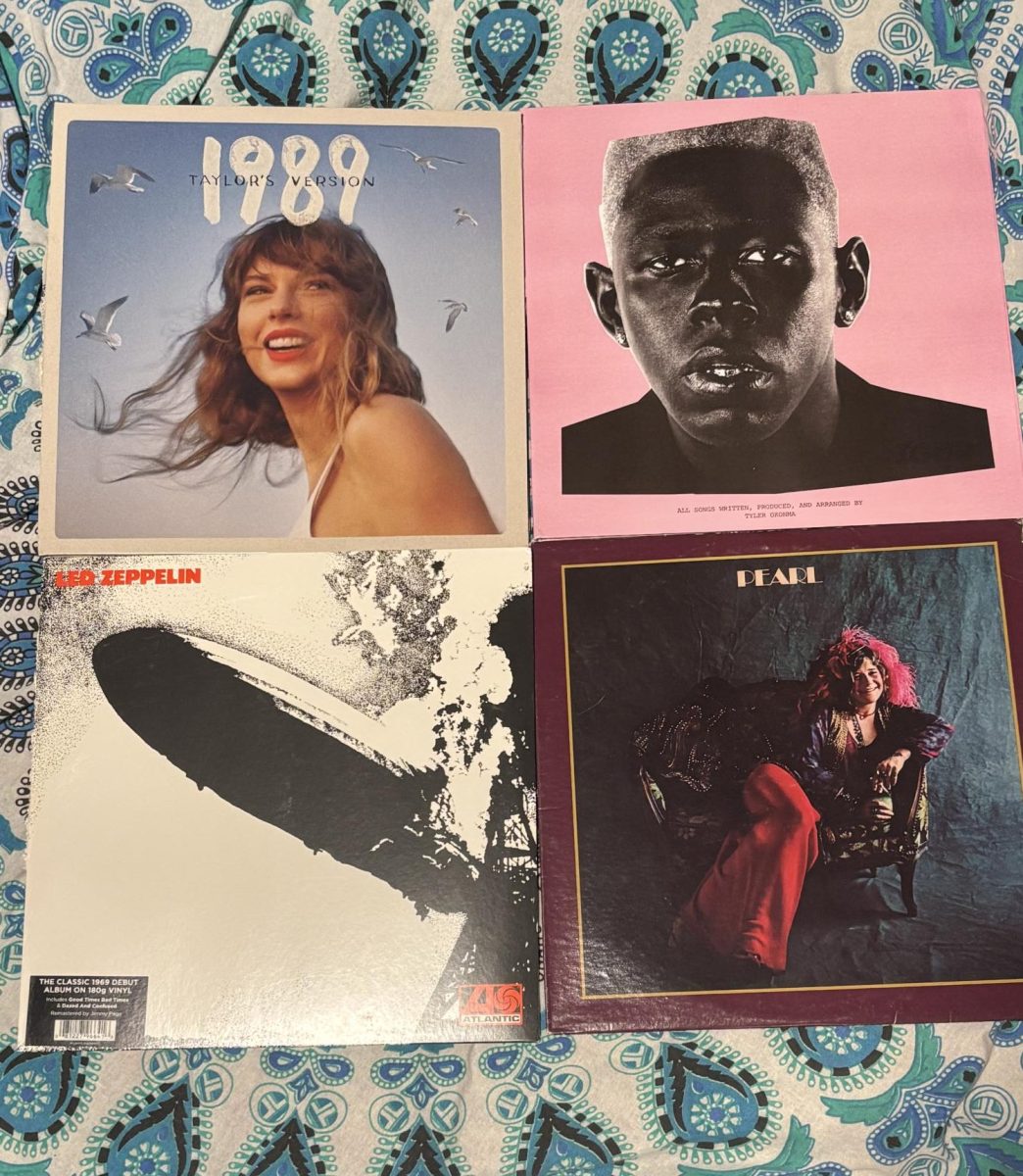
Physical media also brings tangibility to an art form that has become increasingly more virtual. Album artwork, liner notes, and even the minimalist act of placing a record on a turntable contribute to a sensory experience that digital music lacks.
“As AI starts to make its way into music, I think people like the comfort of something they can hold,” Caffery said.
Vinyl’s comeback isn’t about rejecting progress; it’s about balance. In a world defined by instant gratification and algorithmic playlists, vinyl offers something slower, intentional, and human. The process of playing a record transforms listening from a background activity into an act of appreciation. A small but powerful rebellion against the speed of the digital age.